Photographer Adam Isler is a New York City native. He first picked up a Kodak “Hawkeye” camera, purchased with $2 and box tops when he was seven, graduated to a Voigtländer Vito C purchased used for $30 when he was twelve and now seldom leaves home without a camera in hand. He posts three new pictures almost every day at obBLOGato.wordpress.com and sells prints and other goodies at islerphoto.zenfolio.com. I have spent a lot of time looking at Adam Isler’s work, and I found myself wondering about the photographer’s process. Like a writer, I imagine, the picture-taker considers composition and subject, thinking about the interplay of elements of the whole. And while writers’ instruments have changed, the photographer’s tools have advanced at a phenomenal pace. How do these artists adjust, and how has technology changed what they do? We turn to Adam Isler for some ideas.
* * *
Ed: You’ve been taking pictures since you were a kid, and obviously the technology has changed drastically. Has this changed your subjects? Do you choose differently?
AI: I don’t think the subjects have changed that much but at the same time the photographs I take have changed. When I was a kid I used a film camera in a manual mode. Also, for a long time I just had a standard 55mm lens. Zooms were big, heavy, expensive and not that good. So after a time shooting with a 55mm lens you know that certain shots aren’t going to work and you don’t bother to take them. Also, if you’re doing the kind of street photography I do it’s not always easy to nail the exposure and the focus quickly enough if you have to do it manually. Nowadays the camera will often get all of those things right for you. And now I can afford to have a few lenses, and zooms are much better than they used to be, so there are many more shots that I’ll take a chance on. It’s not like I’m wasting precious film anymore. So I still photograph the same subjects but I take lots of shots now that once I wouldn’t have bothered trying.
Ed: You have a series of shots of people on the New York City subway. What catches your eye? What makes you choose one person (or more) in particular?
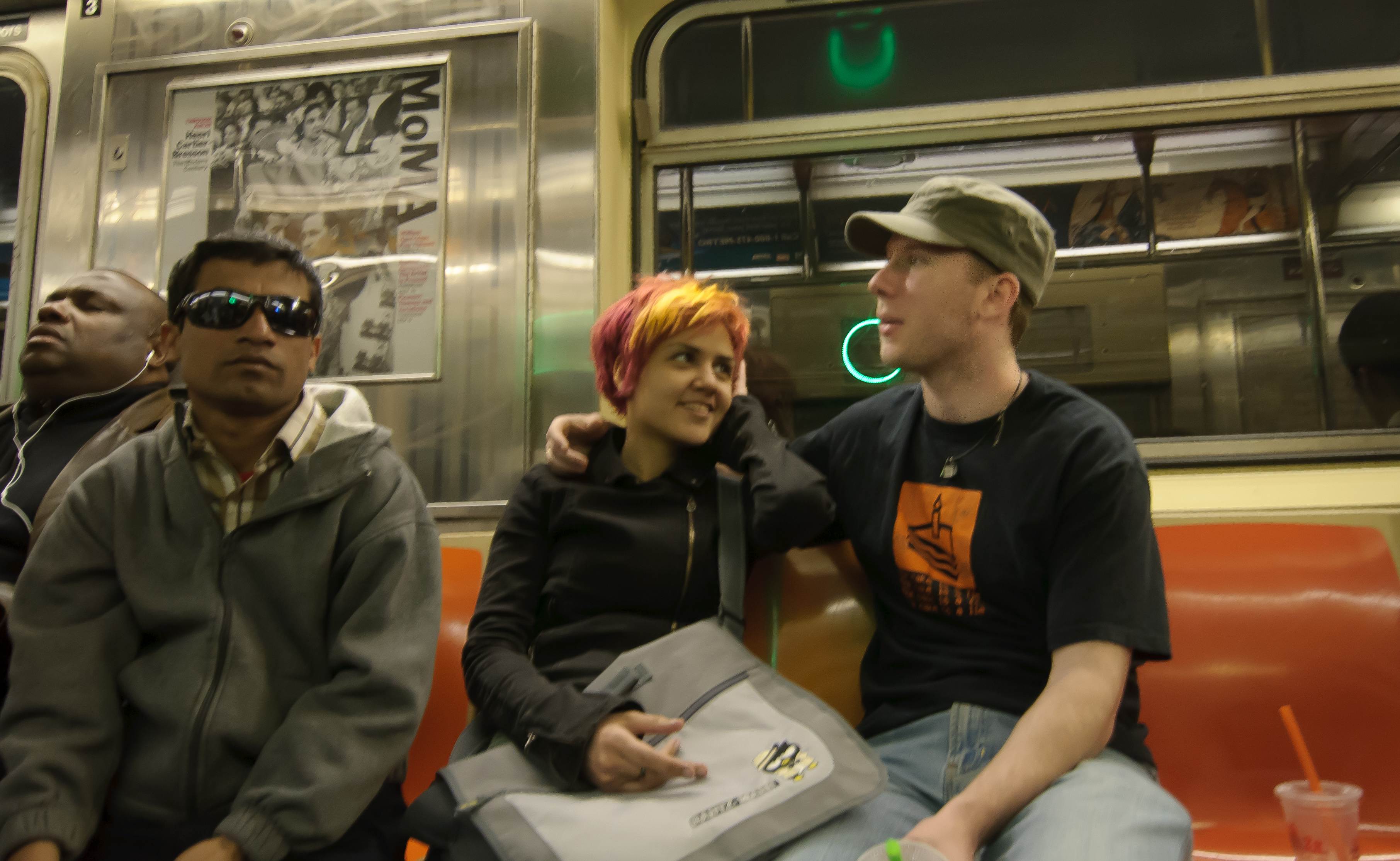
AI: For one thing, I generally avoid taking a picture of a person alone. I usually look for two or three people together, where there’s some sort of dynamic or interaction, as in these: 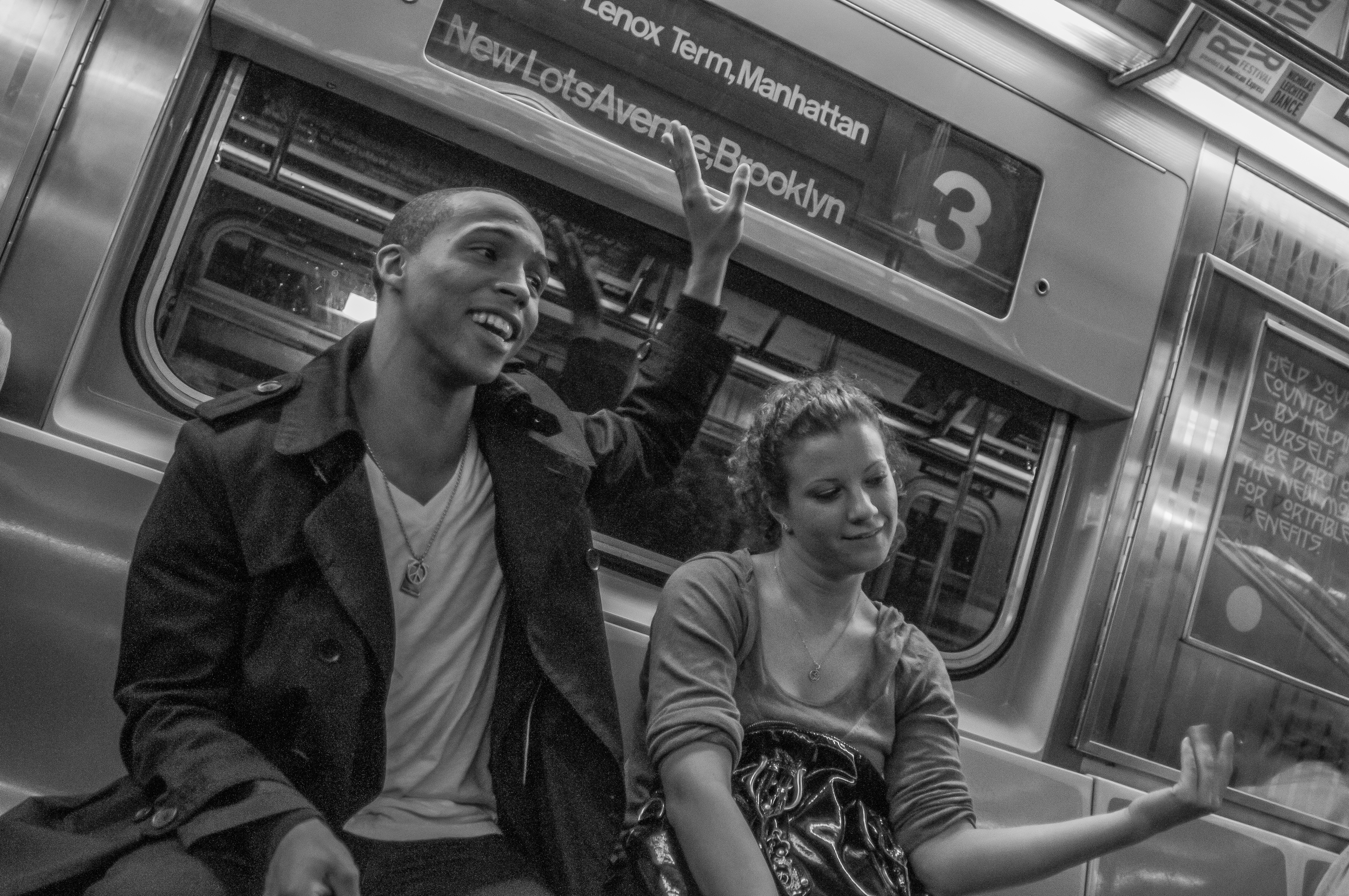

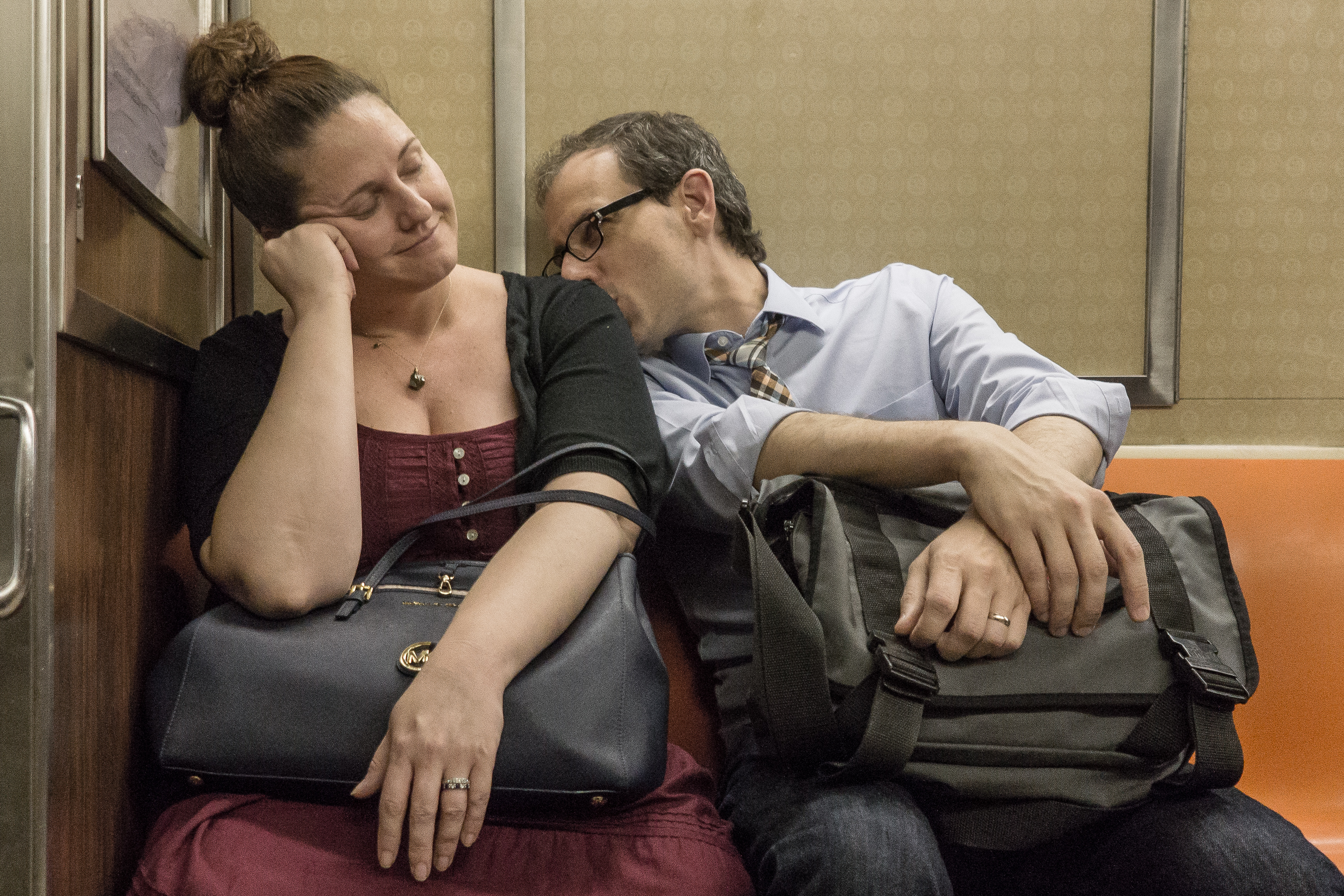
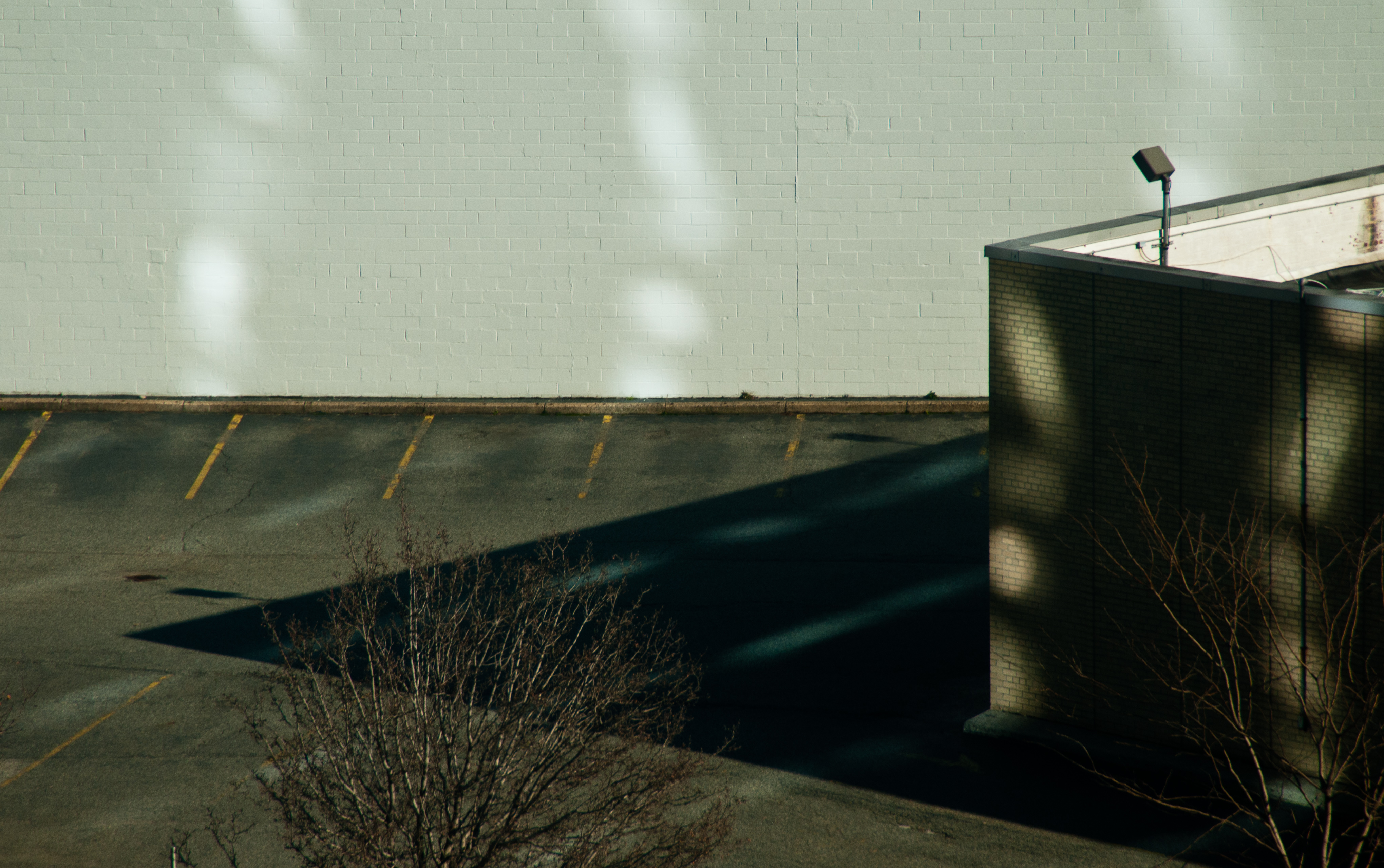
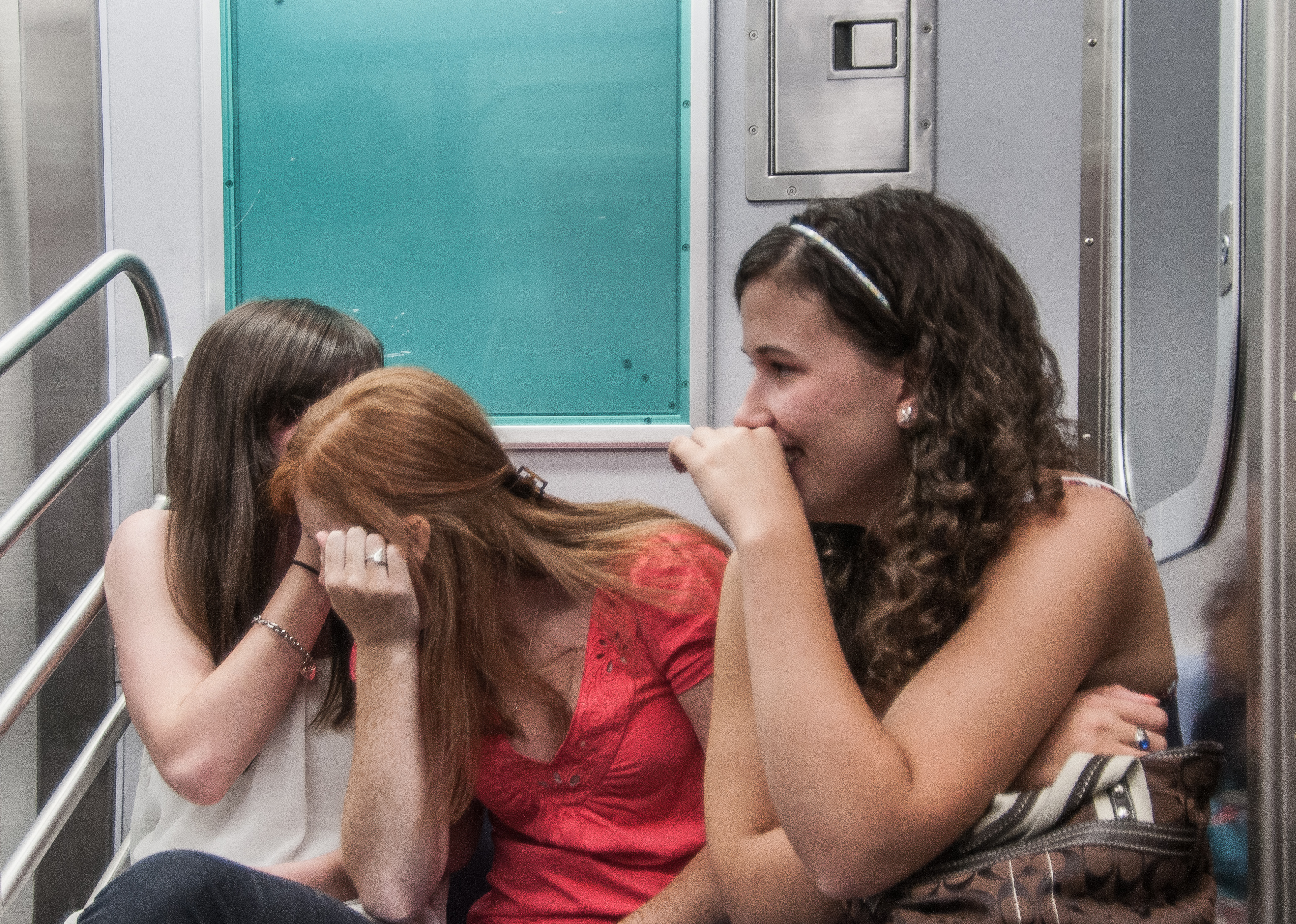 These sorts of pictures create a narrative in the viewer’s mind and that has its own interest. Too often when it’s someone alone there’s a risk of taking a picture that just feels exploitive, as in, “look at this poor homeless person,” and I don’t want to do that. Beyond the dynamic that I see between people I may be interested by some strictly formal compositional elements like color, contrast, shadow, shape or line. I think you can see that in these shots: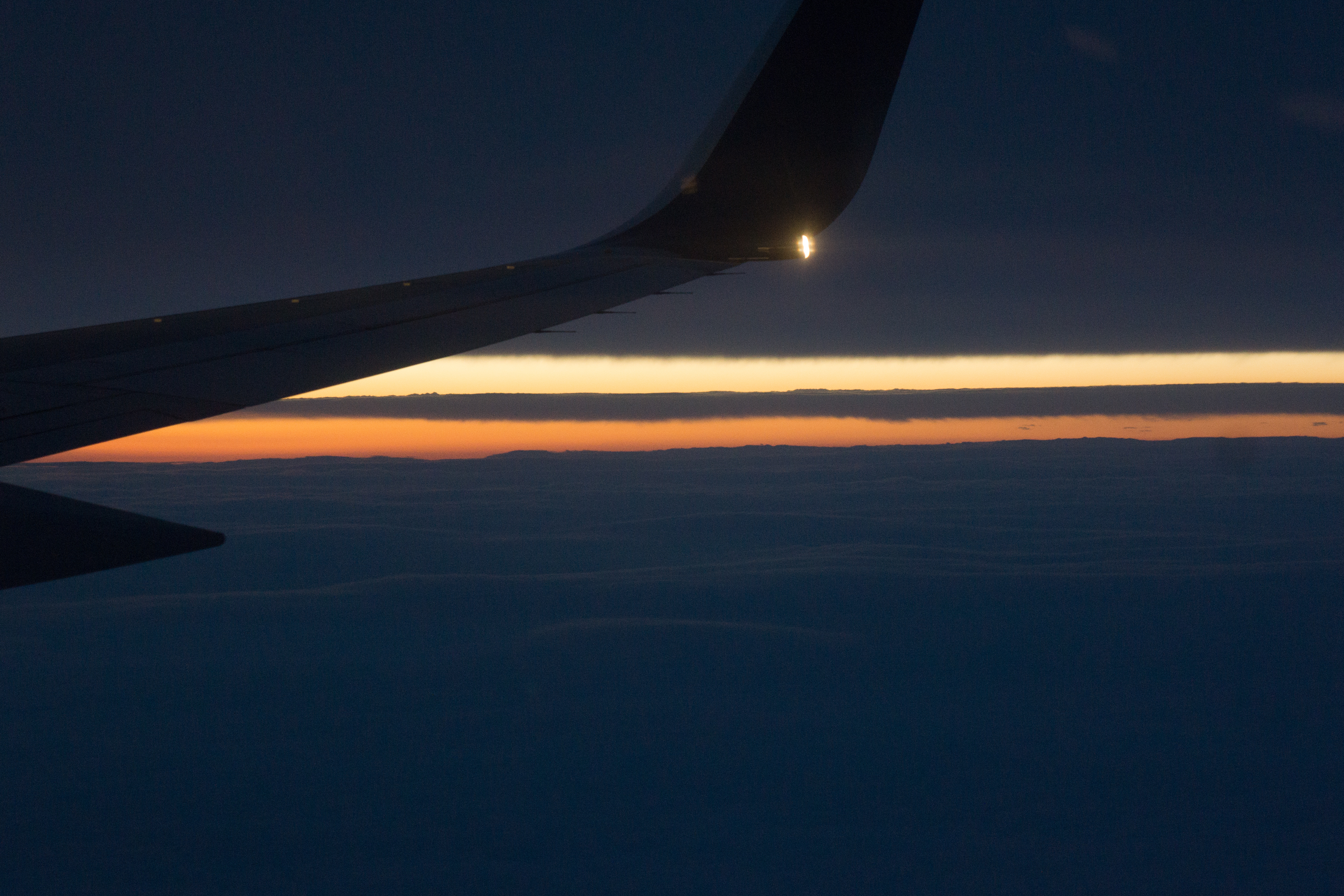

 Ed: So sometimes it’s a narrative and sometimes it’s form that catches your eye. But what motivates you to take pictures, edit pictures–why photography?
AI: That’s a harder series of questions. There’s something about creating a successful image that’s extremely satisfying. I’m not sure I can describe the feeling. I still remember the first print I made in a darkroom when I was 12 or 13 years old. Seeing the image materialize in the tray of developer was magical. Now, of course, you see the image immediately on the back of your camera, but it’s still kind of a thrill when you see you captured a good image. And then it can be quite a thrill to play with it on the computer and pull the image in your mind’s eye out of the file.
Ed: It’s like writing a good sentence or paragraph or page, and then going back over it to tweak it. Why we do that is still a mystery to me.
AI: Why photography. I suppose because when I was younger I couldn’t draw or paint to my satisfaction and photography seemed an easier way to create realistic, representative images. In time I got good enough at photographic technique and knew enough about the history of photography to leave that behind and take pleasure in photography as my preferred medium but it started there for pretty basic reasons.
Ed: Interesting that knowing the history of the form helps you take pleasure in the craft. It sounds familiar to writers who know that reading is the door to writing. In what ways do you find your creative process similar to and different from the process you engage for writing?
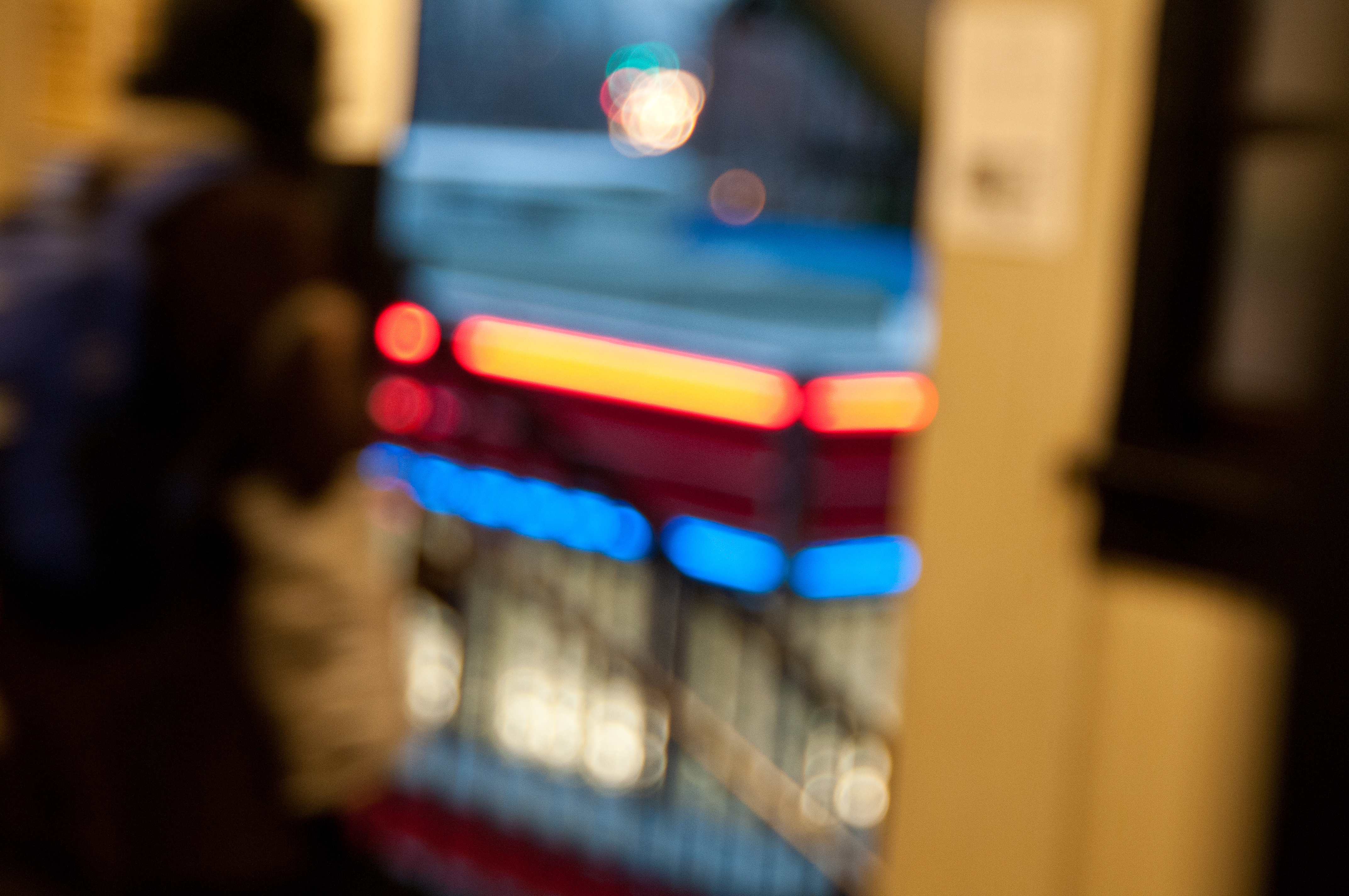
AI: Well I’m not sure there’s much to say on that. As Martin Mull is reputed to have said, “writing about music is like dancing about architecture.” There are so many styles and purposes in writing and also in photography—I’m not sure it’s possible to usefully compare or contrast them. A lot of my work might be considered photojournalism so that would suggest discursive writing, whereas other work might be more like poetry: it’s more allusive and less literal, or you might say less obviously representational: 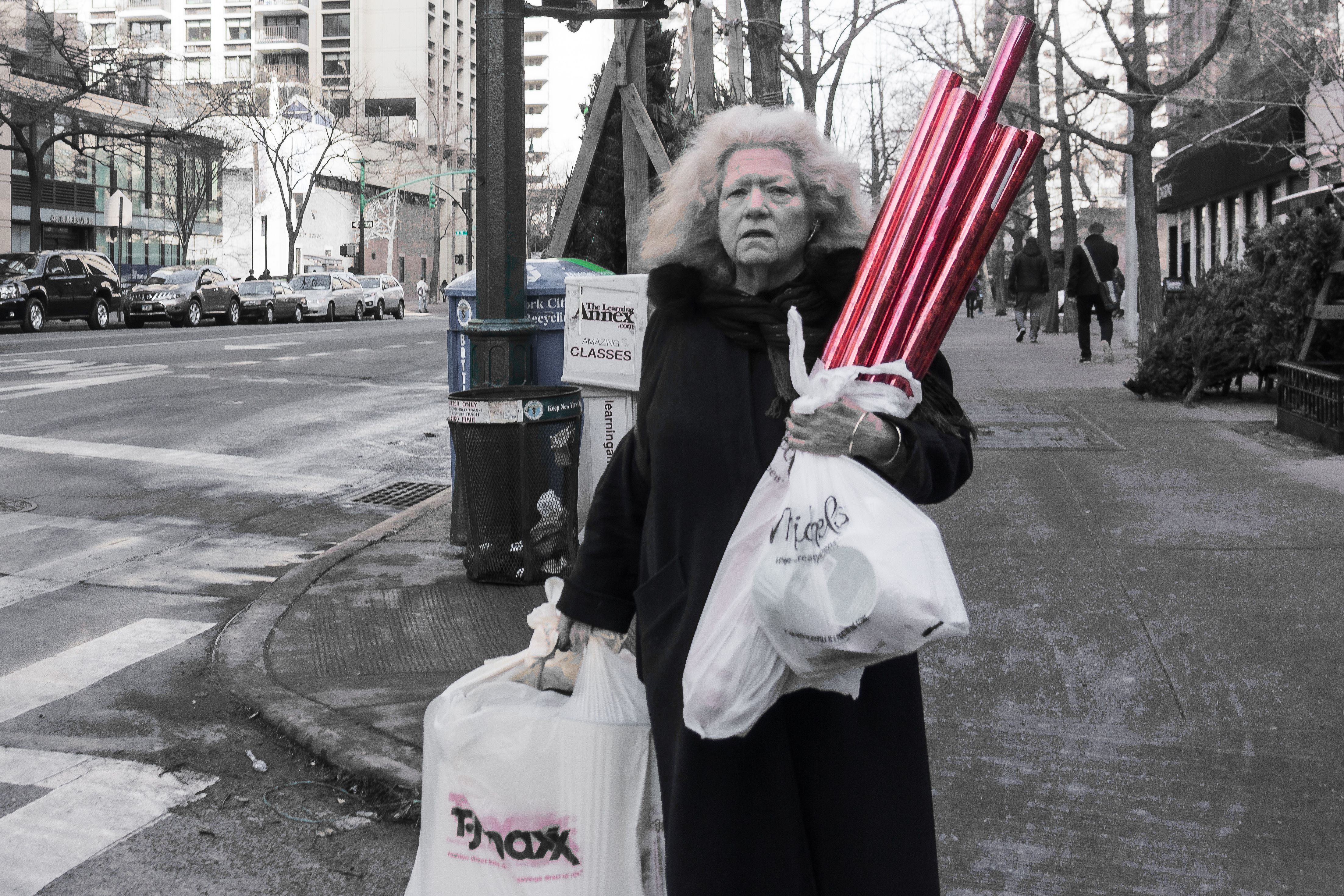
 There are a few elements to my editing process. Typically I’ll take my camera with me whenever I go out of the house and keep it on, in my hand wherever I go. As a New Yorker I tend to go most places locally on foot or on the bus or subway if it’s farther afield. Depending where I go and how long I’m out, I may shoot one or two pictures a day or scores (or, occasionally, hundreds). About once a week I’ll unload the camera chip, converting the raw files to dng and importing them into Photoshop Lightroom. The first step is to tag each image with keywords: the subject, predominant colors, genres, location, etc. using my own structured vocabulary (a multi-level tree of key-words). Then I move to the “Develop” module and start choosing images to work on. It’s hard to say what may draw me in: it could be interesting expressions on people’s faces, an interaction among people, some dramatic composition of colors, contrasts, shapes, and lines. I’ll start by checking any perspective distortions and then do any cropping to make sure the image is balanced and composed the way I want. One of the first decisions I make is whether color is important to the image. Next I’ll check exposure, often making some global adjustments to highlights and shadows and make adjustments to contrast or clarity (local contrast). The eye is drawn to contrasts, so much of the editing is around making sure that there’s a contrast path that I want the viewer’s eye to follow. Next I’ll do some local sharpening, typically around the main subject’s face (or faces, if there are multiple subjects). Then, if I decide against color, I’ll convert to black & white, usually with Nik Silver Efex Pro 2. While there I’ll often add a vignette effect, darkening the edges to focus the eyes of the viewer more to the center. Alternately, I’ll return to Lightroom and use a radial graduated filter to vignette in a less central way. Of course, each image is different, but that describes a typical set of editing processes.
Ed: I love these technical details! I see so many similarities in the processes of artists–photographers, painters, poets. There’s the initial vision, followed by a controlled blurring or sharpening of lines to bring out the artist’s idea.
Make sure to visit Adam’s blog and web site to check out more of his beautiful work: obBLOGato.wordpress.com and islerphoto.zenfolio.com.
 Words and Pictures by
Leave a comment